Price per square metre
- All property types
- €4,222 / sqm
- Villa
- €3,810 / sqm
- Apartment
- €4,793 / sqm
Data as of · October 2026
Costa del Sol
A local guide to Nerja on the Costa del Sol: what the area is like, who lives here, and live asking prices.
Overview
Climate, transport, population and what Nerja is known for.
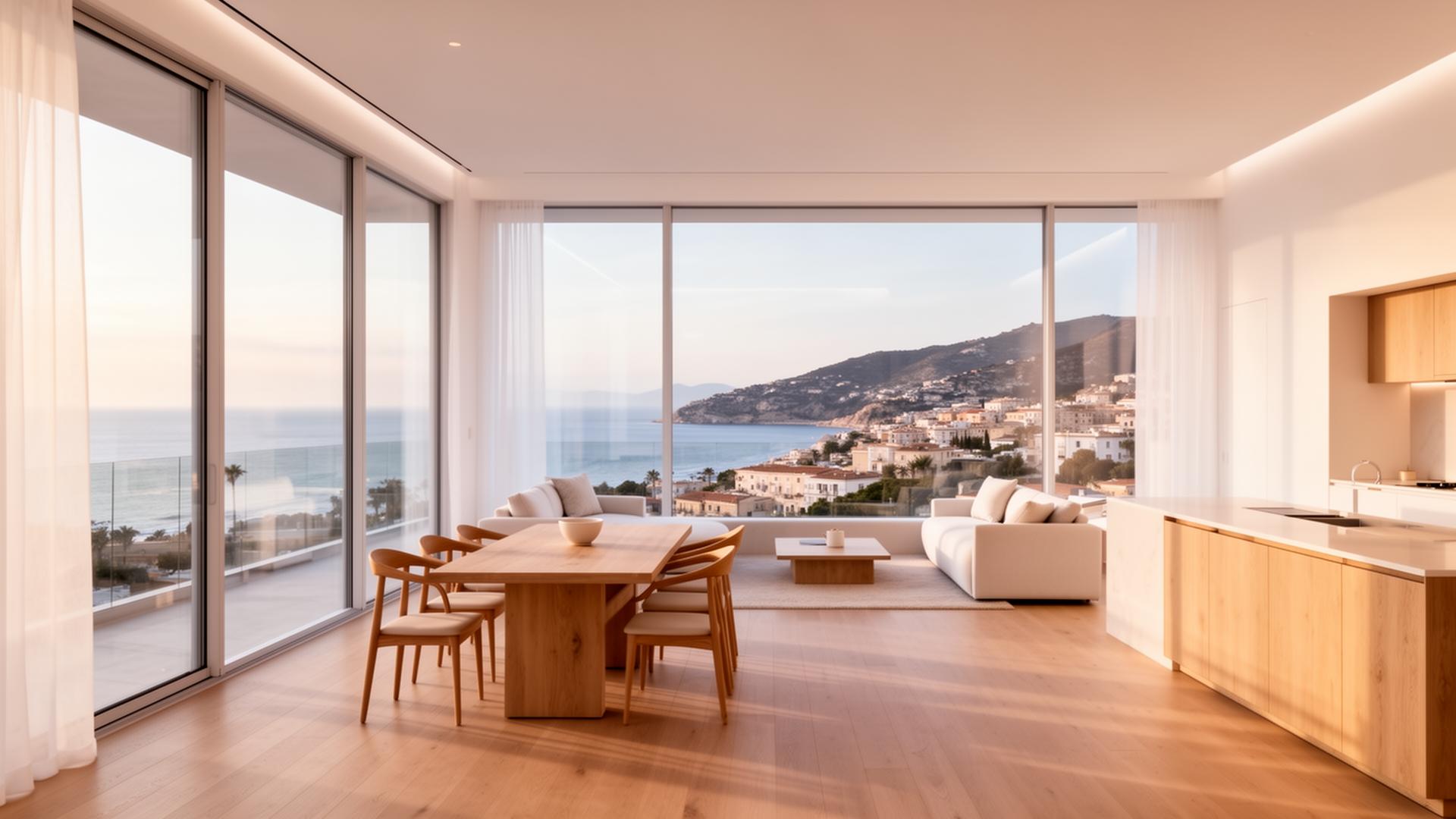
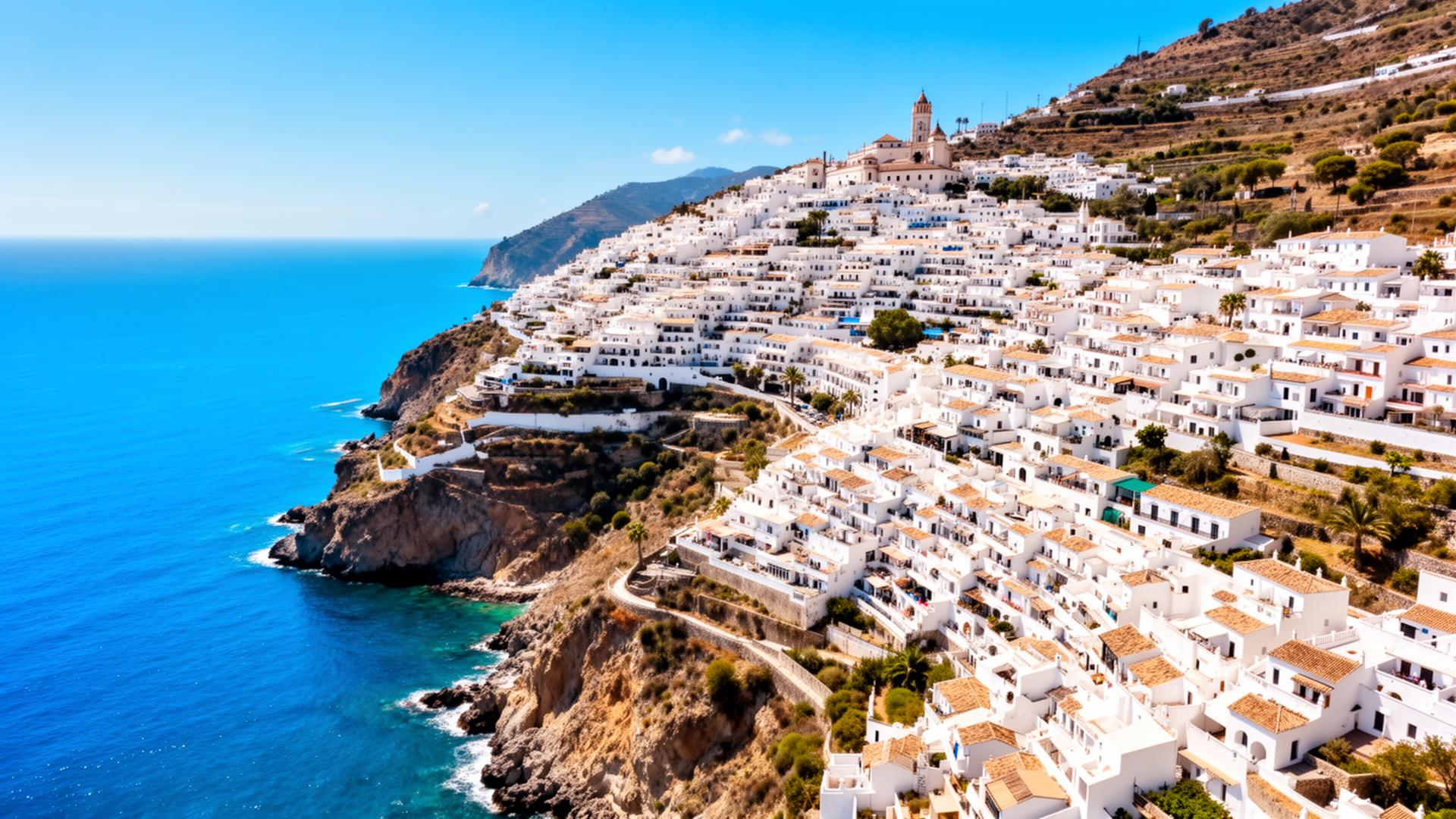
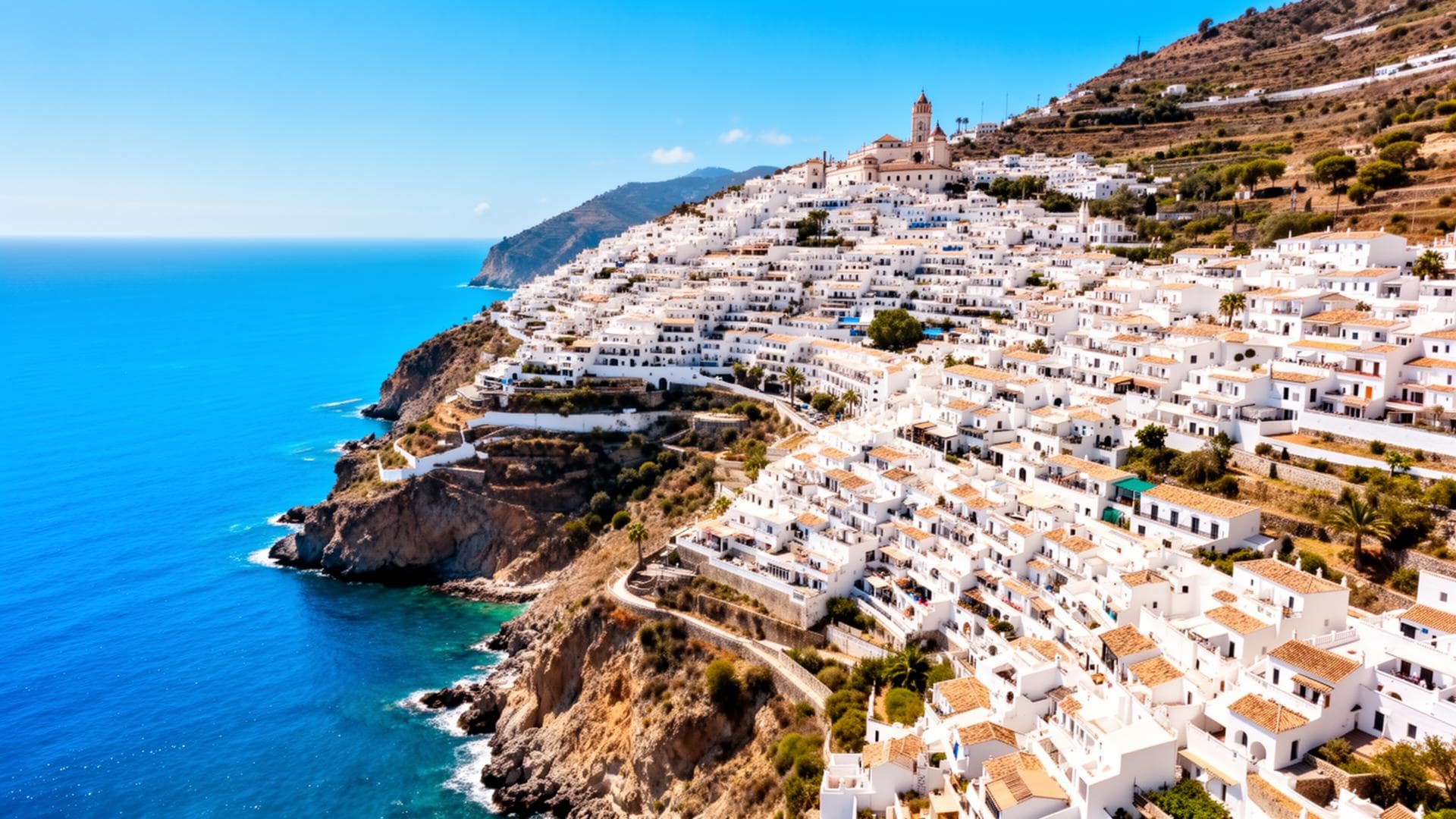
Nerja occupies the eastern edge of Málaga province where the coastal mountains drop sharply toward pebbled coves and small beaches. This compact town of whitewashed houses retains the layout and scale of a traditional Andalusian settlement, with narrow streets climbing the hillside and the Balcón de Europa promenade jutting out over the Mediterranean. Protected from overdevelopment by its topography and the presence of the Sierras de Tejeda, Almijara y Alhama Natural Park to the north, Nerja offers a slower pace than the densely built resorts further west along the coast.
The town centre clusters around the Balcón de Europa, a palm-lined viewpoint built on the remains of a castle. From here, streets radiate inland in a web of lanes too narrow for traffic, lined with family-run shops and apartment buildings rarely exceeding four storeys. The old quarter feels genuinely lived-in, with Spanish residents forming the majority in central streets, while the hillsides above and areas east toward Maro attract a higher concentration of international buyers drawn by sea views and quieter surroundings.
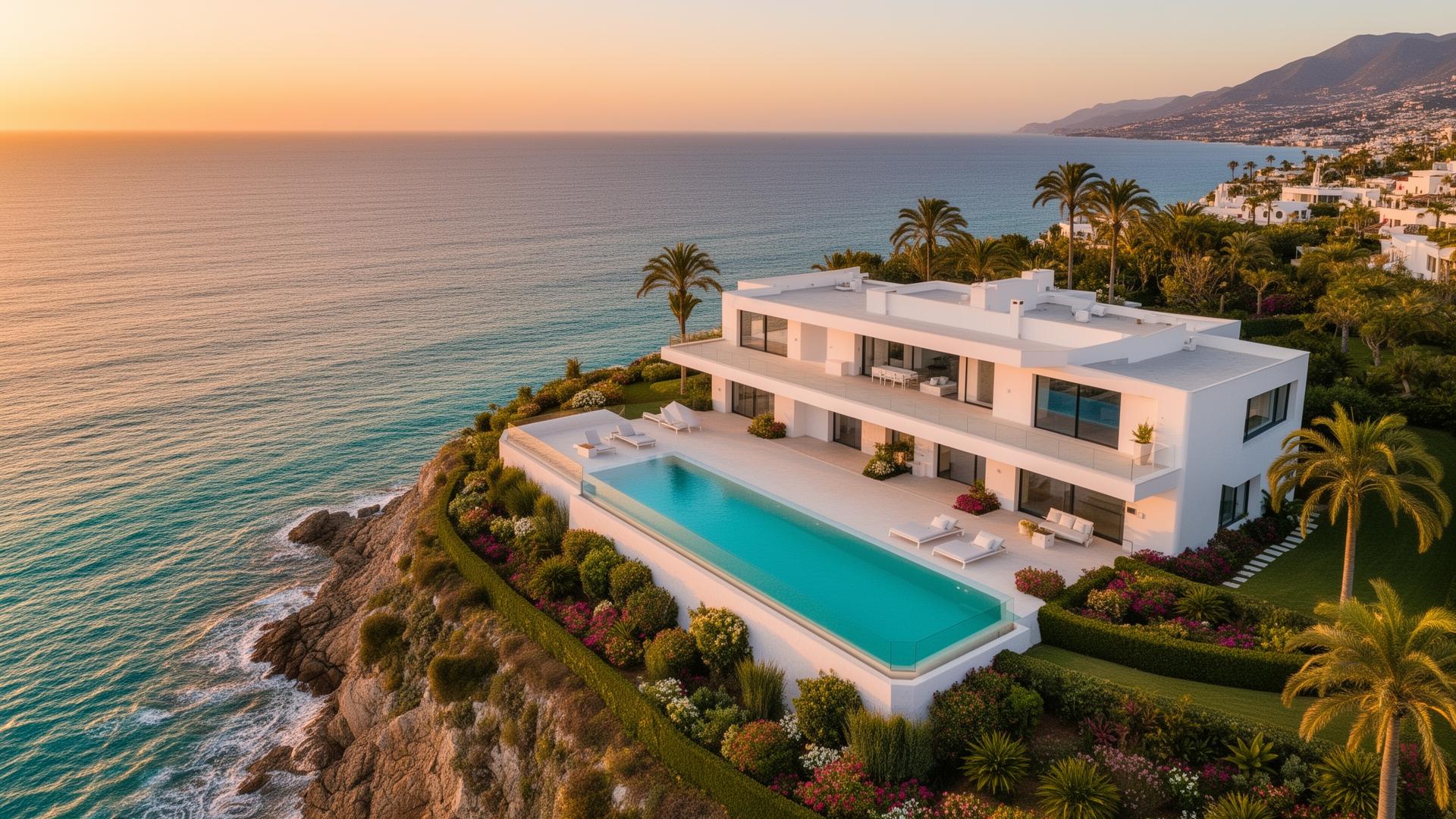
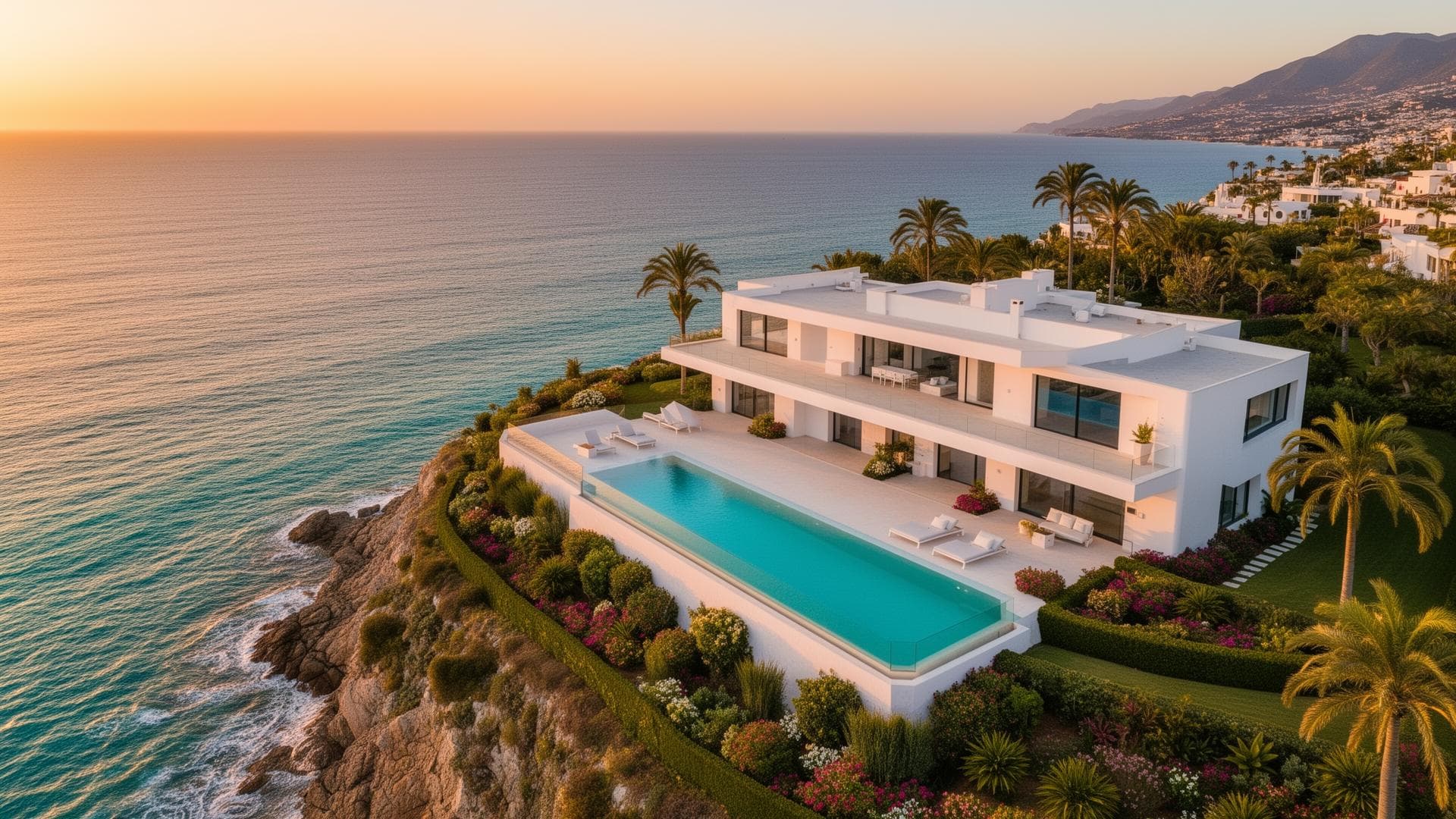
East of the centre, the road to Maro passes through a string of urbanisations built into steep slopes, many dating from the 1980s and 1990s. These developments offer detached villas and townhouse complexes with shared pools, terraced into cliffsides that provide long views across the water. Maro itself remains a small village with a handful of restaurants and access to hidden coves reached by footpaths. West of Nerja, the coastal strip toward Torrox is flatter and more developed, with larger apartment blocks and easier beach access but less of the topographic drama that defines Nerja proper.
The mountains press close to the coast here, limiting flat land and making Nerja feel contained. Development spreads along the coast and climbs the hills rather than sprawling inland. This geography creates distinct microclimates: the centre enjoys sea breezes, while higher elevations can be several degrees cooler and occasionally catch clouds that miss the shore.
Apartments dominate the centre and immediate hillsides, ranging from compact one-bedroom flats in older buildings to modern penthouses in small-scale developments. Many properties occupy elevated plots carved into the slopes, with communal gardens and pools built on multiple levels to accommodate the gradient. Villas tend to be modest in size compared to those in Marbella or Sotogrande, often two or three bedrooms with private pools, reflecting the constrained building plots available. Townhouses in gated complexes are common in the eastern urbanisations, offering a middle ground between apartment living and detached homes.
Buyers here prioritise the character and setting over luxury specifications. Northern European retirees form a large segment, alongside remote workers seeking a base with reliable internet and a manageable cost of living. Families looking for a holiday home within driving distance of Málaga airport find Nerja appealing for its beaches and outdoor access, though the limited selection of international schools makes it less practical as a year-round base for those with school-age children. Spanish buyers from inland cities such as Granada maintain weekend apartments, particularly in the town centre where walking access to amenities matters more than sea views.
Daily life centres on foot traffic. Most residents walk to shops, markets, and cafés rather than driving, a habit reinforced by limited parking and the steep, narrow streets. The Tuesday market near the Nerja caves draws locals and expats alike for fruit, vegetables, and household goods. Restaurants serve traditional Andalusian dishes alongside northern European options catering to the established foreign community. Beach clubs are informal, with chiringuitos offering simple grilled fish and cold drinks rather than the DJ-driven scenes found further west. The Cueva de Nerja, a vast cave system a short drive inland, attracts visitors but does not dominate the town's rhythm.
Summer brings Spanish holidaymakers who fill the beaches and restaurants, creating a seasonal lift in activity without overwhelming the town's infrastructure. Autumn and spring see walkers and cyclists taking advantage of the cooler weather and mountain trails in the surrounding natural park. Winter is quiet, with many seasonal businesses closing and the foreign resident population forming the core of activity. Golf requires a drive to courses near Torre del Mar or further afield, so Nerja suits those for whom golf is an occasional outing rather than a weekly commitment.
Nerja works for buyers who want a functional, unpretentious town with good weather and access to nature without the polish or pace of more developed resorts. Retirees who value walkability and a mixed community find it comfortable, as do remote workers who prioritise outdoor activities and a lower cost base over networking events and coworking spaces. Families seeking a holiday retreat with beaches and hiking nearby will find Nerja manageable, though the lack of direct flights to northern Europe and limited international schooling options make it less suitable for full-time family relocation.
Those who need a golf course within ten minutes, expect a wide choice of fine dining, or want a property market with high liquidity and rapid resale potential should look elsewhere. Nerja's appeal lies in its modesty and geography, not in exclusivity or infrastructure. Buyers accustomed to Marbella's variety or the conveniences of Estepona may find the town limited, while those seeking a quieter alternative to overdeveloped stretches of the coast will appreciate exactly those qualities.
Málaga airport sits roughly 60 kilometres west, reached by the A-7 coastal road in around an hour, though traffic can extend that during peak times. The N-340 runs through Nerja, connecting it to Torrox, Torre del Mar, and Málaga in one direction and Almuñécar and Granada in the other. Public buses link Nerja to Málaga and surrounding towns, though service frequency drops outside summer months. Healthcare is available at the local health centre, with the nearest hospital in Torre del Mar and larger facilities in Málaga. International schools are concentrated in Málaga and the western Costa del Sol, making Nerja less practical for families requiring English-language education. Spanish state schools serve local families and a handful of expat children integrated into the system.
What you'll find here
What's nearby
Explore Nerja by area
Each neighbourhood has its own rhythm. Pick where to start.
Market data
Live pricing snapshot, refreshed daily from active Nerja listings.
Nerja properties
Hand-picked homes in Nerja, Costa del Sol.

Nerja · Costa del Sol East
€2.10M
Price
4
Beds
6
Baths
289 m²
Built area

Nerja · Costa del Sol East
€1.26M
Price
5
Beds
2
Baths
138 m²
Built area

Nerja · Costa del Sol East
€1.25M
Price
4
Beds
4
Baths
270 m²
Built area

Nerja · Costa del Sol East
€1.15M
Price
3
Beds
3
Baths
206 m²
Built area
Nerja properties
Nerja properties updated daily from live listings.
Price reduced
Property types
44 homes across 4 property types in Nerja.
Nerja
Apartments for sale in Nerja
14
Listings
€4,222
Avg / sqm
Nerja
Villas for sale in Nerja
22
Listings
€4,222
Avg / sqm
Nerja
Penthouses for sale in Nerja
1
Listings
€4,222
Avg / sqm
Nerja
Townhouses for sale in Nerja
7
Listings
€4,222
Avg / sqm
Search by setting
Sea view
Gated community
Beach side
Communities
Nerja guides
In-depth guides for international buyers considering Nerja, Costa del Sol.
Taxes, legal steps, timelines, viewing trips, financing, and the quirks foreign buyers need to know, step by step.
IBI, the Modelo 210 tax non-residents forget, community fees and selling costs, with 2026 Andalucía rates and a worked example.
An honest verdict with town-by-town Costa del Sol prices, the real risks, and who should not buy.