
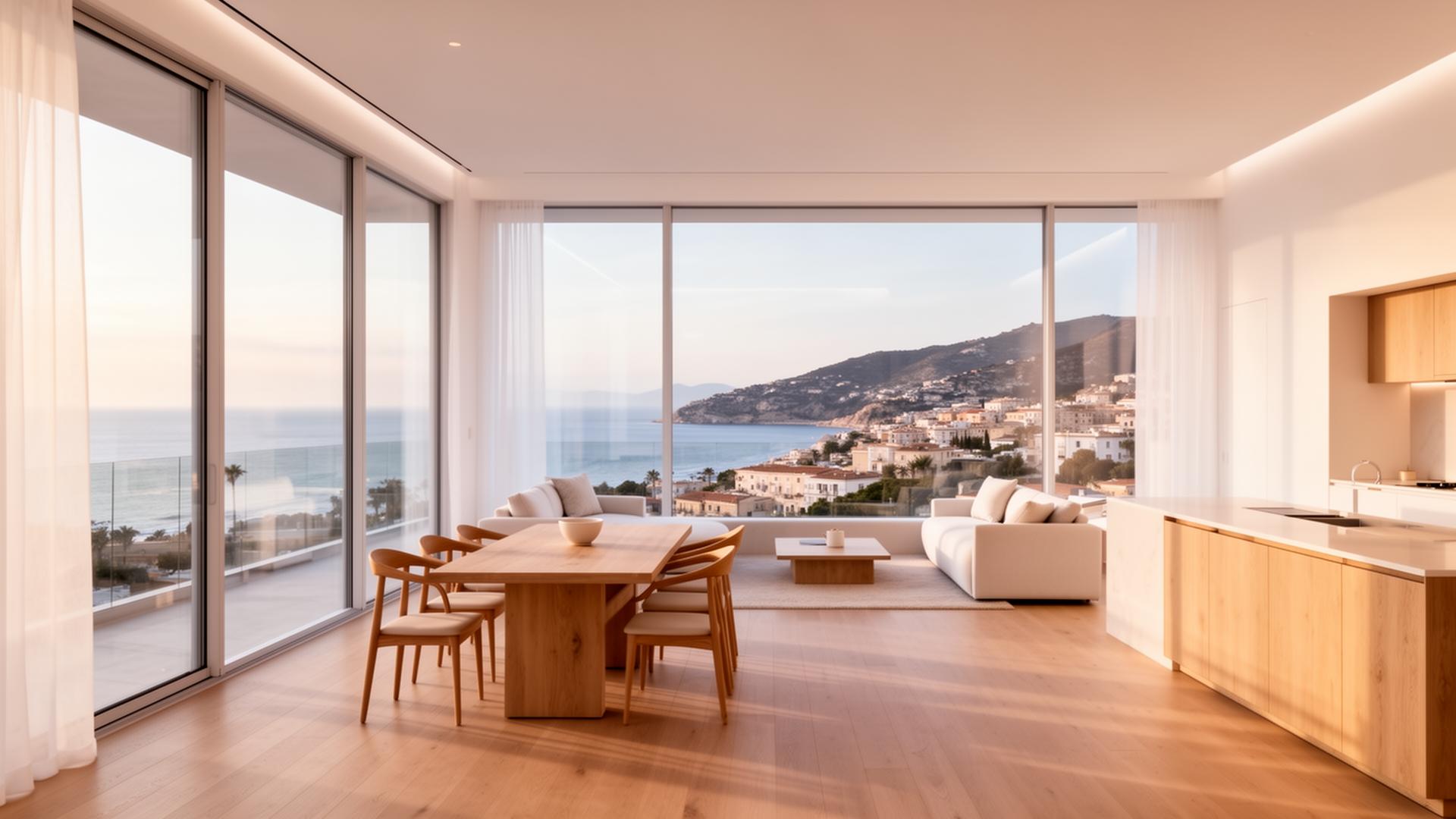

Price per square metre
- All property types
- €3,673 / sqm
- Villa
- €3,949 / sqm
- Apartment
- €4,032 / sqm
Data as of · October 2026
Costa del Sol
A local guide to Rincón de la Victoria on the Costa del Sol: what the area is like, who lives here, and live asking prices.
Overview
Climate, transport, population and what Rincón de la Victoria is known for.
Rincon de la Victoria sits along the eastern Costa del Sol coastline, a traditional working town that has grown into a popular residential destination while maintaining its authentic Spanish character. Located just minutes from Malaga city, this municipality stretches across several kilometres of Mediterranean shoreline and extends inland toward the foothills of the Axarquia region.
The town serves as a genuine middle ground between urban convenience and coastal living, attracting those who want easy access to a major city without the holiday resort atmosphere that defines much of the western Costa del Sol.
The municipality divides into several distinct areas, each with its own identity. The historic core around Calle Copo and the old town centre retains narrow streets and traditional squares where daily markets and neighbourhood bars anchor community life. Torre de Benagalbon, technically part of the municipality, functions almost as a separate village to the west, while Benagalbon itself sits inland surrounded by farmland and subtropical cultivation. The beachfront paseo runs for several kilometres, lined with apartment buildings, chiringuitos, and beach access points that give way to a long stretch of dark sand.
The town has absorbed significant growth over recent decades, with residential development spreading across the hillsides that rise gently from the coast. Urbanisations climb the slopes behind the main coastal road, offering elevation and views while remaining within short reach of sea level services. The atmosphere remains distinctly Spanish, with local families forming the majority demographic and Spanish the dominant language in shops and services. International residents tend to integrate into existing neighbourhoods rather than clustering in separate enclaves, and the rhythm of life follows Spanish patterns rather than adapting to foreign expectations.
Geography here favours accessibility over dramatic scenery. The terrain rises gradually rather than sharply, making much of the built area easily walkable and well connected by road. The coastline lacks the rocky coves and cliffs found further east, presenting instead a straightforward beach town layout where everything runs parallel to the shore. This practicality defines the character: functional, connected, and lived-in year round rather than designed primarily for tourism or leisure.
The property landscape centres on apartments, which dominate both the beachfront and hillside developments. These range from older walk-up blocks close to the town centre to more recent gated communities with pools and parking on the elevated streets inland. Townhouses appear in certain urbanisations, typically in rows that climb the hillside streets, while detached villas remain relatively uncommon and confined to pockets on the outskirts. The scale stays modest compared to luxury developments elsewhere on the coast, with buildings generally mid-rise and density moderate rather than intense.
Buyers here tend to prioritise value and location over resort-style amenities or prestige addresses. Spanish families buying second homes or retirement properties form a significant segment, alongside European buyers seeking affordable coastal access within easy reach of an airport and city services. The profile skews toward practical long-term residents rather than speculative investors or holiday-only owners. Those drawn here appreciate the authenticity and the balance between local life and coastal proximity, accepting that this is a real town with working infrastructure rather than a polished resort enclave.
Daily life revolves around the town centre and the beachfront paseo, where locals walk, cycle, and socialise throughout the year. Supermarkets, pharmacies, banks, and municipal services cluster around the main streets, while the seafront offers a long promenade ideal for exercise and leisurely evening strolls. The beaches here are wide and sandy, well maintained and equipped with showers and seasonal lifeguard services, though they lack the manicured feel of resort beaches further west. Chiringuitos serve fresh seafood and traditional Spanish dishes, and the town maintains a calendar of local festivals and events rooted in Andalusian tradition rather than international tourism.
Dining and entertainment options reflect the local population, with tapas bars, family restaurants, and neighbourhood cafes outnumbering upscale or international establishments. Malaga city sits close enough for regular cultural outings, shopping trips, and access to a wider range of restaurants and nightlife. Golf courses lie further west along the coast, requiring a short drive but remaining easily accessible. The seasonal rhythm here is less pronounced than in pure resort towns: the population stays steady year round, shops and services remain open, and the tempo of life shifts only slightly between quieter and busier periods. This consistency appeals to those seeking a stable, functional home base rather than a location that comes alive only during peak visitor months.
Rincon de la Victoria suits buyers who want genuine Spanish coastal living with strong transport links and everyday convenience. It works well for retirees seeking affordability and accessibility, families who value good local schools and safe neighbourhoods, and remote workers who need proximity to an international airport without the expense of Malaga city itself. The town appeals to those comfortable integrating into a predominantly Spanish environment and who appreciate the unhurried pace of a real town over the polished presentation of a purpose-built resort.
It is less suitable for buyers seeking luxury amenities, marina lifestyle, or a cosmopolitan social scene dominated by international residents. Those who prioritise golf course proximity, high-end dining, or a glamorous address will find better matches further west. Equally, buyers wanting rural seclusion or dramatic mountain and sea views should look inland or further along the Axarquia coast. Rincon de la Victoria delivers practical, connected, authentic coastal living for those who value substance and convenience over style and status.
Malaga Airport lies approximately twenty minutes west by car via the A-7 coastal motorway, with regular bus services connecting the town to the airport and Malaga city centre. The town has its own healthcare centre and easy access to hospitals in Malaga, including both public and private facilities. Local schools serve the resident population, with international schooling options located in Malaga and along the western Costa del Sol corridor. The train line runs close by, with stations in Torre del Mar to the east and Malaga to the west providing regional and long-distance rail connections. Daily amenities, banking, and municipal services are all present within the town itself, reducing the need for frequent travel.
What you'll find here
What's nearby
Explore Rincón de la Victoria by area
Each neighbourhood has its own rhythm. Pick where to start.
Market data
Live pricing snapshot, refreshed daily from active Rincón de la Victoria listings.
Rincón de la Victoria properties
Hand-picked homes in Rincón de la Victoria, Costa del Sol.

Rincón de la Victoria · Costa del Sol East
€2.95M
Price
20
Beds
10
Baths
422 m²
Built area

Rincón de la Victoria · Costa del Sol East
€1.24M
Price
4
Beds
2
Baths
180 m²
Built area

Rincón de la Victoria · Costa del Sol East
€1M
Price
12
Beds
5
Baths
495 m²
Built area

Rincón de la Victoria · Costa del Sol East
€995k
Price
4
Beds
3
Baths
235 m²
Built area
Rincón de la Victoria properties
Rincón de la Victoria properties updated daily from live listings.
Price reduced
Property types
30 homes across 3 property types in Rincón de la Victoria.
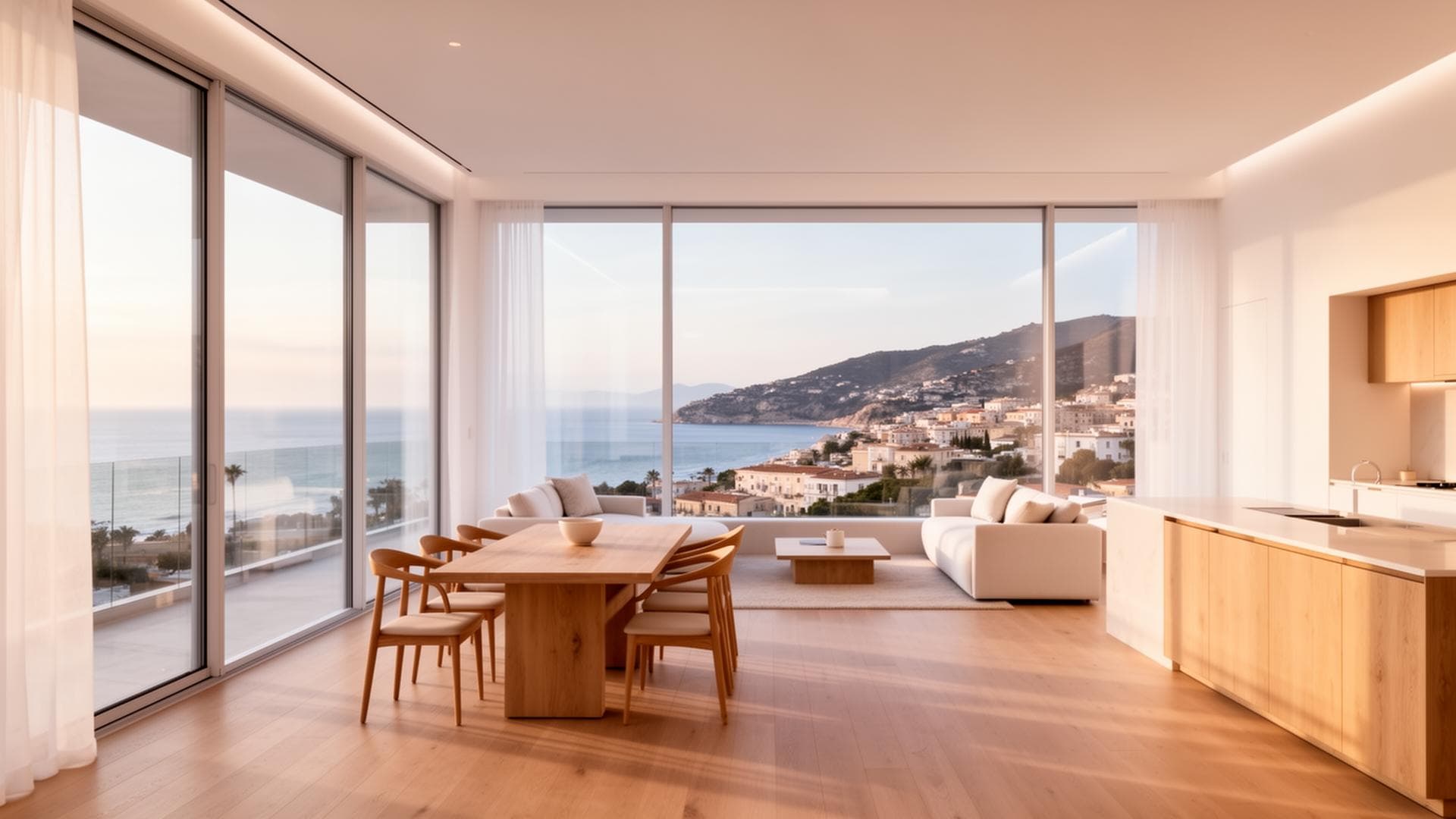
Rincón de la Victoria
Apartments for sale in Rincón de la Victoria
10
Listings
€3,673
Avg / sqm

Rincón de la Victoria
Villas for sale in Rincón de la Victoria
12
Listings
€3,673
Avg / sqm

Rincón de la Victoria
Townhouses for sale in Rincón de la Victoria
8
Listings
€3,673
Avg / sqm
Search by setting
Sea view
Beachfront
Communities
Rincón de la Victoria guides
In-depth guides for international buyers considering Rincón de la Victoria, Costa del Sol.
Taxes, legal steps, timelines, viewing trips, financing, and the quirks foreign buyers need to know, step by step.
IBI, the Modelo 210 tax non-residents forget, community fees and selling costs, with 2026 Andalucía rates and a worked example.
An honest verdict with town-by-town Costa del Sol prices, the real risks, and who should not buy.